


The History of Pilates: From Contrology to Rise


You've felt the shake, the strength, the stretch… but do you know the story behind the movement? Most people know Pilates as a core-burning, posture-fixing workout that leaves you walking taller (and maybe slightly wobbling after your first Reformer class). But beneath the springs and sweat lies something deeper - a legacy rooted in resilience, innovation, and intentional movement. Pilates isn't just a workout trend. It's a legacy. A method born from illness, war, innovation, and grit - created by a man who believed in the power of conscious movement to transform lives.
Pilates began as Contrology - the original name for the method - and it was crafted by a man whose life story is as compelling as the practice itself: Joseph Pilates.
If you're curious about the why behind the movements, or you've heard whispers of "Classical vs. Contemporary" and want to know where it all began, this post is your invitation to pull back the curtain and explore how Pilates began - and how its roots still shape the way we move today.
From Sickly Child to Movement Pioneer
Joseph Pilates was born in Germany in 1883. As a child, he struggled with asthma, rickets, and rheumatic fever. But instead of being defined by weakness, he became obsessed with rebuilding his strength. Drawing inspiration from gymnastics, bodybuilding, martial arts, and even animal movement, he developed a method of physical conditioning unlike anything else at the time.
He believed that modern life (with its bad posture, shallow breathing, and mindless routines) was sabotaging human health. His solution? A system he called Contrology: the "complete coordination of body, mind, and spirit."
The Origins of the Method: Joseph Pilates and the Isle of Man
While interned in England during World War I, Pilates was later transferred to Knockaloe Camp on the Isle of Man - and it's here, on that small island in the Irish Sea, that the story gets really interesting.
Legend has it that Pilates watched the island's cats moving with such natural strength and flexibility that it shaped how he thought about the body - stretch, control, recover. He also began rigging springs to hospital beds so that bedridden internees could keep their strength up, an idea that would later inspire the Reformer and Cadillac apparatus.
The Isle of Man holds a special place close to my own heart too, which makes tracing Pilates' roots back there feel a little full circle for us at Rise.
His approach wasn't about sweating or burning calories. It was about control, intention, and balance. Every movement had a purpose. Every breath had focus. This was movement as medicine.
The Core Principles of Pilates
The method Joseph Pilates developed is rooted in six foundational principles that continue to guide both classical and contemporary practices:
Breath: Movement starts with the breath. It energises, stabilises, and focuses the body.
Concentration: Mindful movement. Every exercise demands full mental presence.
Centering: All power stems from the "Powerhouse" - your core.
Control: No sloppy reps. Every motion is deliberate and precise.
Precision: Quality over quantity. Exact movement yields maximum benefit.
Flow: Movement should be seamless, fluid, and efficient.
At Rise, you'll hear these principles woven into every cue - they're part of our movement DNA.
Return to Life: Joe's Vision in His Own Words
In 1945, Joseph Pilates published Return to Life Through Contrology, laying out his beliefs, his philosophy, and the original 34 Mat exercises that remain the foundation of Classical Pilates today.
In it, he argued that true health isn't just about physical fitness, but about developing a body and mind capable of handling daily life with "spontaneous zest and pleasure."
It's not just a workout. It's a way of living in your body.
The First Generation: The Teachers Who Carried the Torch
When Joseph Pilates passed away in 1967, he didn't leave a formal certification program. What he left was a group of passionate students who had studied alongside him and Clara, his wife and teaching partner.
These First-Generation Teachers - now referred to as the Pilates Elders - each went on to preserve, adapt, and evolve the method in their own way. Some stayed close to Joe's system. Others infused it with new knowledge, techniques, or rehabilitation-based ideas. Among them:
Romana Kryzanowska
Carola Trier
Ron Fletcher
Eve Gentry
Kathy Grant
Lolita San Miguel
Mary Bowen
Alan Herdman
Their impact still echoes in Pilates studios around the world - including here at Rise.
Classical vs Contemporary: Two Sides of the Same Legacy
As Pilates grew beyond Joe's original studio, different branches of the method began to form.
🔹 Classical Pilates aims to stick as closely as possible to the original work, following the same sequences, using traditional apparatus, and preserving the structure Joe intended.
🔸 Contemporary Pilates blends the original with modern biomechanics, therapeutic principles, and adaptations for diverse bodies and goals. It often introduces new exercises, updated equipment, and more flexibility in sequencing.
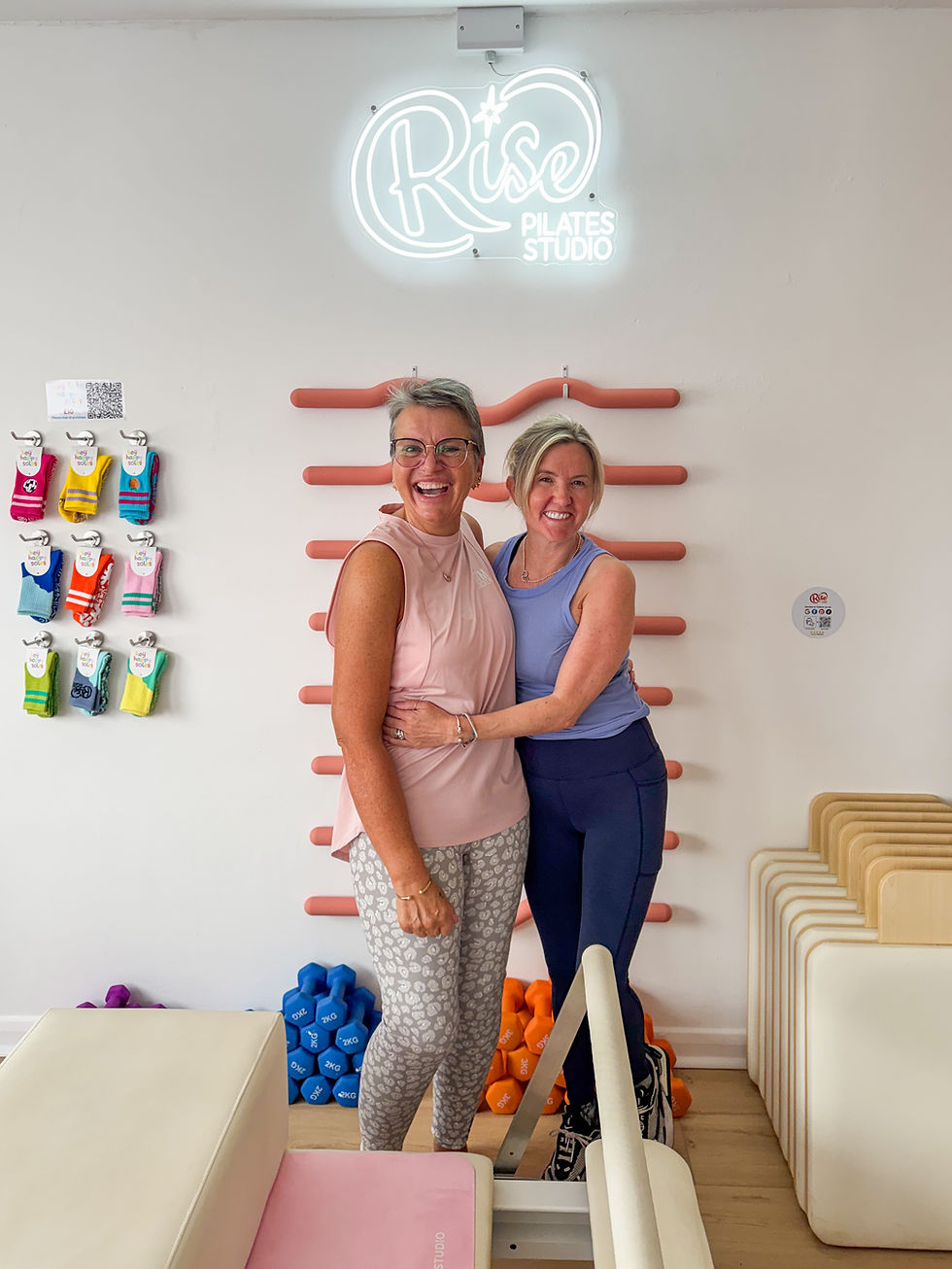
At Rise, we don't sit neatly in either camp - we're not strictly Classical, and we're not strictly Contemporary either. We're a blend of both. We honour Joe's original principles and the discipline behind them, while staying open to modern knowledge, different bodies, and what actually works for the people in front of us. That's not a compromise - it's exactly how we like to teach.
Why This Legacy Still Matters
Pilates isn't just a fitness class. It's a method built on resilience, created by a man who turned struggle into strength and designed a system to help others do the same.
When you step into a Pilates class today, whether on the Reformer or on the mat, you're tapping into a practice that's been passed down, reinterpreted, and kept alive for over a century.
Every breath you take, every rep you control - it's part of something bigger.
You're not just doing Pilates.
You're continuing a legacy.


Comments