


One Chair, Endless Challenge: Wunda Chair Pilates 💜

Of all the equipment in the studio, the Wunda Chair is the one that gets the most confused looks from first-timers. It's small. It looks a bit like a stool with a spring underneath. And yet ask anyone who's actually trained on one, and they'll tell you it's one of the most quietly demanding pieces of kit Joseph Pilates ever designed.

Here's the thing about the Wunda Chair: it's not one exercise, or even one type of workout. It's an entire training system disguised as a single piece of furniture.
Small Footprint, Enormous Range
The Wunda Chair consists of a padded seat and a spring-loaded pedal - that's genuinely most of it. No sliding carriage, no ladder, no elaborate mechanism. And yet from that one simple setup, it supports seated work, standing work, lying-down work, and everything in between.
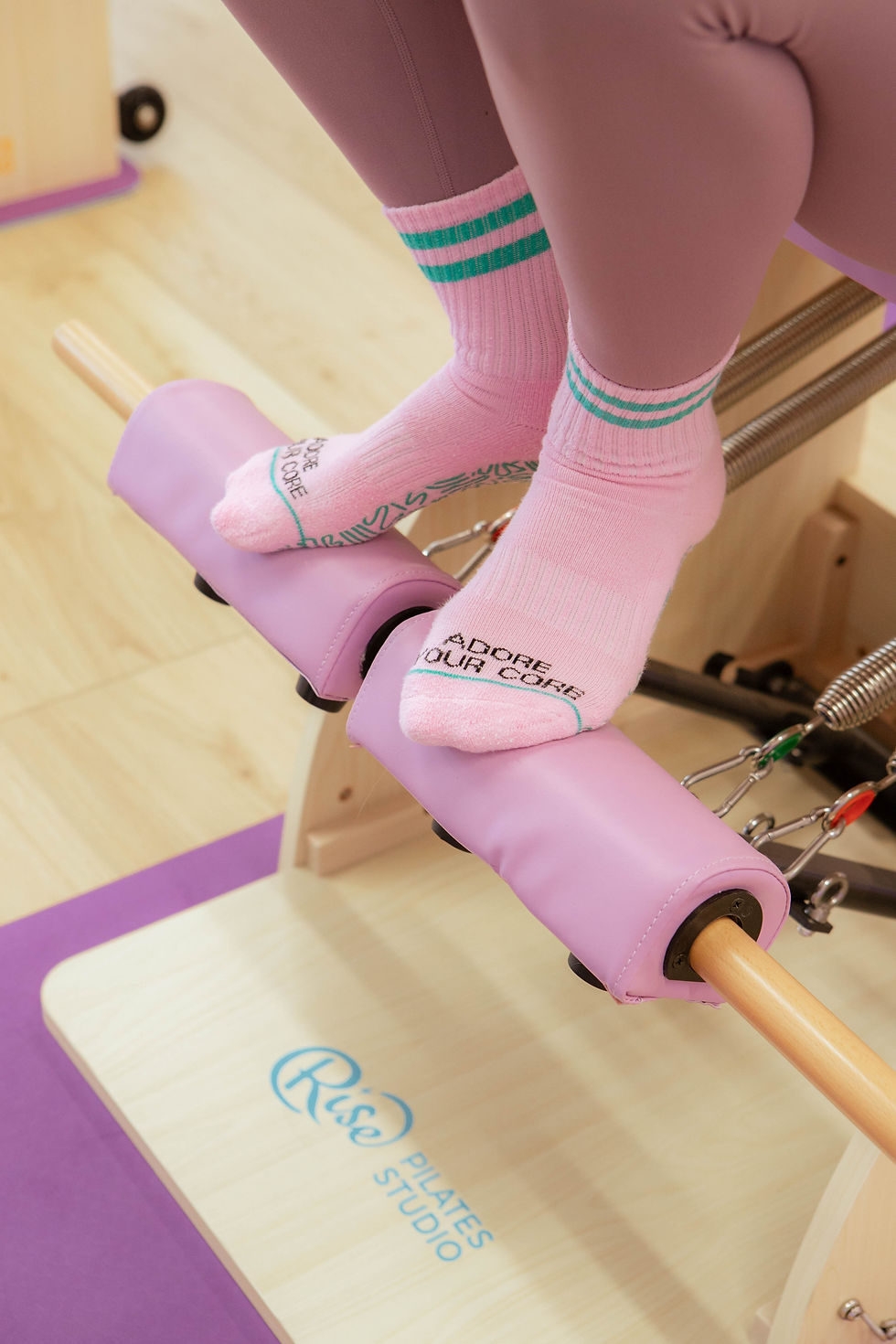
Push the pedal down while seated and you're building leg strength. Stand on it and shift your weight, and suddenly you're deep into balance and core control. Lie back over it and it becomes a stretch and mobility tool. Same chair. Completely different workout, depending on how you approach it.
Why It Challenges Everyone Differently
This is where the Wunda Chair earns its reputation. Because so little of your body is actually connected to the apparatus at any given moment - often just your hands, or just your feet on the pedal - your own stability has to do the work that a bigger machine might otherwise support for you.
That means a total beginner and an advanced mover can be doing what looks like the same exercise, and getting a completely different challenge out of it. Adjust the spring tension, change your body's position, alter how much of you is actually touching the chair, and the same movement becomes an entirely different exercise. It's genuinely rare for a single piece of equipment to scale that cleanly across every level in the room.
It Builds What Other Apparatus Can't Quite Reach
Because the Wunda Chair asks your body to stabilise itself rather than being held in place by a bigger frame, it's particularly good at building the smaller, deeper muscles that keep your joints honest - the ones that don't get much attention on equipment that does more of the supporting for you.
Push-up and tricep work builds real upper-body strength. Standing balance sequences challenge coordination in a way that transfers directly to everyday movement - stepping off a curb, catching yourself on uneven ground. And seated core work refines the kind of control that's hard to fake anywhere else.
A Small Chair That Never Gets Boring
Because there's so much you can vary - the spring, your position, how much of your body is loaded, whether you're seated, standing, or lying - the Wunda Chair rarely feels repetitive, even if you use it every week. There's always another variation your instructor can pull out, and always another layer of challenge waiting once the current one feels manageable.
It's easy to underestimate a piece of equipment that small. Give it one real session and it stops being underestimated fast.

Comments